Colombia Solo Travel 2026: Costs, Safety and the Best Route for First-Time Solo Travelers
Colombia tends to trigger two very different reactions. Some travelers picture colorful colonial streets, mountain towns, and Caribbean beaches. Others immediately wonder whether it is actually safe to go alone. Both reactions are understandable.
The truth sits somewhere in the middle.
Colombia is one of the most rewarding countries in South America for solo travelers, but it is also a destination where good judgment matters. If you approach it with realistic expectations, a sensible budget, and a flexible itinerary, Colombia can be surprisingly easy to travel independently.
What catches many first-time visitors off guard is how varied the country feels. One week you are wandering through Medellín’s creative neighborhoods, the next you are hiking in the Cocora Valley, and a few days later you are swimming in the Caribbean near Tayrona National Park. Distances are larger than they look on the map, but domestic flights are affordable enough that moving around is usually straightforward.
This guide covers what solo travel in Colombia actually costs in 2026, whether it is safe to travel to Colombia alone, and the route I would recommend for a first visit.

Is Colombia Safe for Solo Travel?
The short answer is yes, Colombia is generally safe for solo travelers who use common sense.
That answer may sound overly simple, but it reflects the reality on the ground. Most visitors complete their trips without any serious issues. At the same time, Colombia is not a place where you can switch off completely and assume every area is equally safe.
The biggest risks for travelers are usually petty theft, phone snatching, and scams rather than violent crime.
One phrase you will hear often is no dar papaya, which roughly means “don’t make yourself an easy target.” It is practical advice. Walking around with your phone in your hand, flashing expensive jewelry, or getting careless after a night out is where many problems begin.
Solo travelers often find Colombia easier than expected because hostels and walking tours create a natural social environment. It is one of those countries where you can arrive alone and quickly meet people heading in the same direction.
Is Colombia Safe for Solo Female Travelers?
Many women travel solo in Colombia every year and have excellent experiences.
The usual precautions apply: avoid isolated areas at night, use trusted rideshare apps, be cautious with alcohol, and do not leave drinks unattended. Medellín and Cartagena are particularly social, which can make it easier to meet others without feeling exposed.
The most common feedback from solo female travelers is that staying aware matters more than being fearful.
Common Scams and Safety Tips in Colombia
Most issues are avoidable once you know what to look for.
- Use Uber or registered taxis rather than hailing random cabs late at night.
- Keep your phone out of sight on busy streets.
- Withdraw cash from ATMs inside malls or supermarkets.
- Be skeptical of overly friendly strangers offering unsolicited help.
- Avoid carrying your passport unless required.
- Use a money belt or hidden pouch for backup cards and cash.
A common myth is that every major city in Colombia is dangerous. In reality, most travelers spend their time in well-established tourist areas where the main concern is staying alert, not staying hidden.
Colombia Solo Travel Costs in 2026
Colombia remains one of the better-value destinations in South America, although prices have increased steadily in popular tourist hubs.
Your budget will depend heavily on how often you fly, how much you party, and whether you stay in dorms or private rooms.
Budget Backpacker: $35–$55 per Day
This budget usually covers:
- Hostel dorm bed
- Local meals and street food
- Public transportation
- One or two paid activities spread across several days
Mid-Range Solo Traveler: $70–$130 per Day
This allows for:
- Private rooms in quality guesthouses
- Domestic flights
- Restaurant meals
- Organized tours
- More comfortable transportation
Comfortable Travel Style: $150+ per Day
At this level, you can stay in boutique hotels, take frequent flights, and book private tours.
Realistic Daily Cost Breakdown
A typical day in Medellín might look like this:
- Hostel dorm: $12–$20
- Breakfast and lunch: $8–$12
- Dinner: $8–$20
- Metro and cable cars: $2–$4
- Coffee or snacks: $3–$6
That puts a practical daily budget around $40–$60 without trying too hard to save money.
The subtle but important point is that Colombia feels cheap until you start taking multiple tours and domestic flights. Activities like paragliding in Medellín or a trip to Tayrona can push your budget up quickly.

How Much Does a Two-Week Colombia Solo Trip Cost?
For a comfortable backpacking trip, most solo travelers spend between $900 and $1,800 for two weeks, excluding international flights.
A sample mid-range budget might look like this:
- Accommodation: $250–$500
- Domestic flights: $150–$300
- Food: $250–$400
- Activities: $150–$350
- Local transport: $50–$100
If you travel slowly and stick mostly to buses, Colombia becomes much more affordable.
Best Places to Visit in Colombia Alone
Colombia works especially well for solo travelers because several destinations combine strong hostel scenes with memorable experiences.
Best Places to Visit in Colombia Alone
Colombia is particularly rewarding for solo travelers because the country offers a little of everything: dynamic cities, laid-back mountain towns, and Caribbean beaches. Just as importantly, most of these destinations have well-established hostel scenes and plenty of opportunities to meet other travelers without forcing it.
Medellín
Medellín is the place where many solo travelers end up staying longer than planned. The city has a modern metro system, a comfortable spring-like climate, and a social atmosphere that makes it easy to settle in. Neighborhoods like El Poblado and Laureles are filled with hostels, cafés, coworking spaces, and walking tours, so meeting people rarely requires much effort.
Beyond the city itself, Medellín offers some of the best day trips in Colombia. You can visit Guatapé, go paragliding over the surrounding valleys, or take guided tours that provide useful context about the city’s transformation over the last two decades. It is a destination that feels both energetic and accessible, which makes it an excellent starting point for first-time solo travelers.

Guatapé
Guatapé is one of the most popular day trips from Medellín, and it is easy to see why. The town is known for its brightly painted buildings and relaxed lakeside setting, which feels like a complete contrast to the city.
Most visitors come to climb El Peñol, the massive granite rock overlooking the surrounding islands and reservoirs. The staircase to the top is a workout, but the panoramic views are among the most memorable in Colombia. Even if you are traveling solo, this is the kind of outing that feels easy and sociable because so many other travelers make the same trip.

Salento
Salento is one of the most charming small towns in the country and a highlight for many independent travelers. Located in Colombia’s Coffee Region, it offers a slower pace, colorful streets, and a welcoming atmosphere that makes it easy to unwind.
The main draw is the Cocora Valley, where towering wax palms create one of Colombia’s most iconic landscapes. Many travelers also tour local coffee farms to understand how the country’s most famous export is produced. Salento is not the cheapest stop in Colombia, but the scenery and atmosphere make it well worth including.

Cartagena
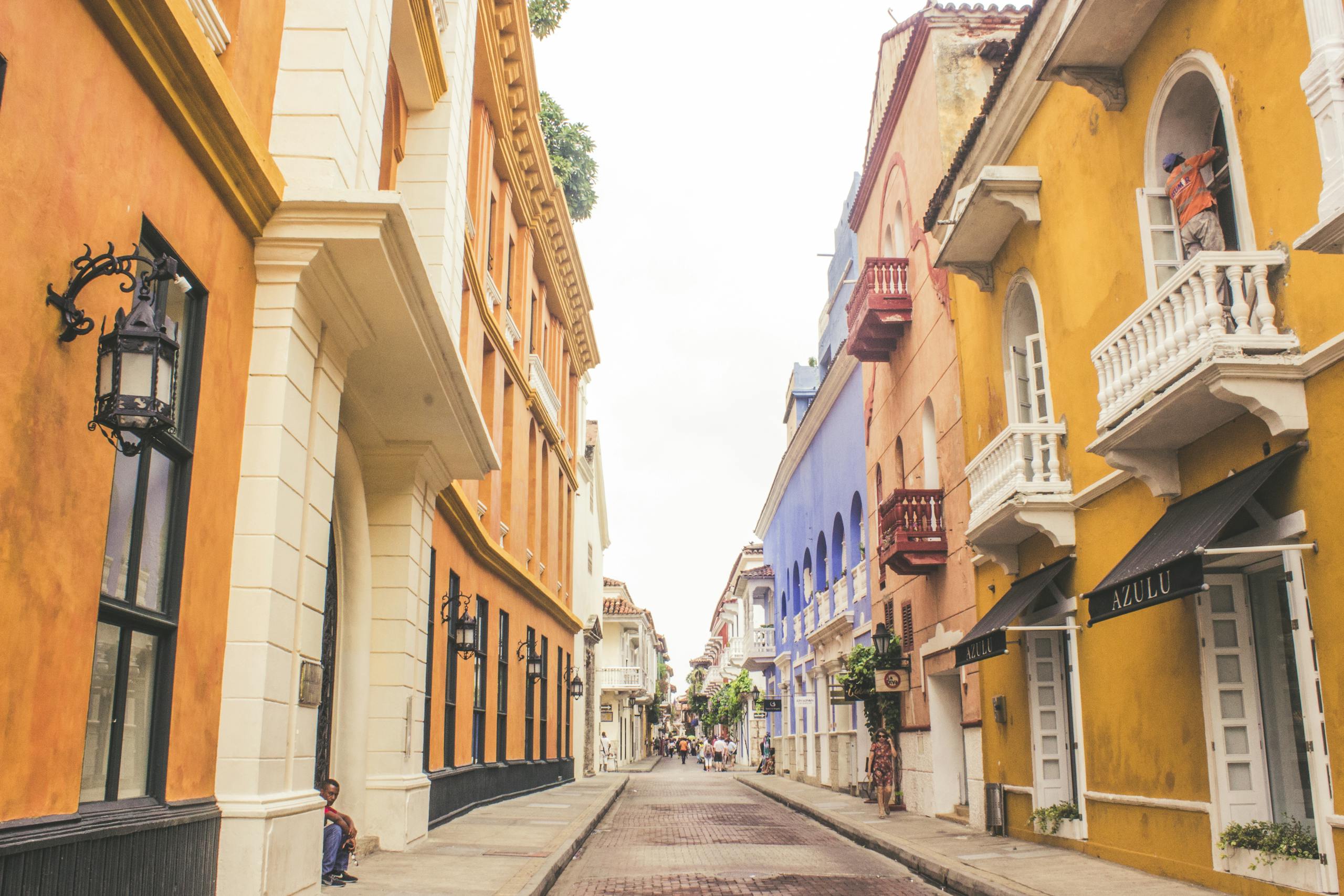
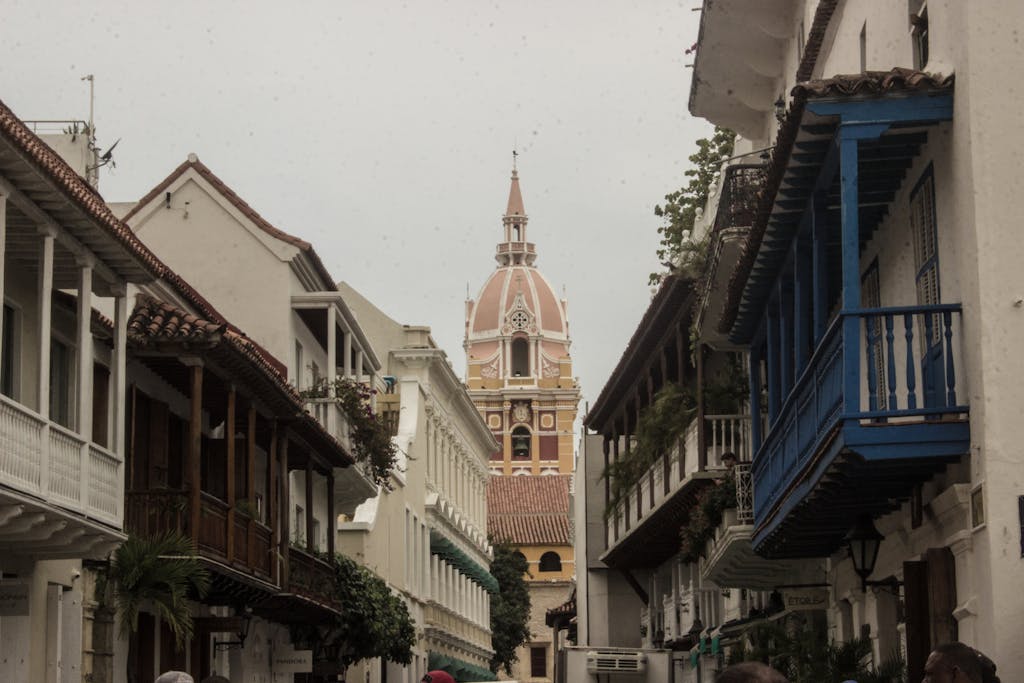
Cartagena is often the most visually striking destination on a first trip to Colombia. The historic walled city is filled with colonial architecture, flower-covered balconies, and lively plazas that are especially atmospheric in the evening.
Cartagena is also one of the more expensive stops on this itinerary, and the heat can be intense. Still, it is worth visiting for at least a few days. Solo travelers can explore the old town, take a cooking class, or join boat trips to nearby islands. While the city is undeniably touristy, its character and history are hard to ignore.
Santa Marta
Santa Marta is less polished than Cartagena, but it serves as the main gateway to some of Colombia’s best natural attractions. Most travelers use it as a base for visiting Tayrona National Park, Minca, and the Caribbean coast.
The city itself is often treated as a transit stop, though the historic center has enough restaurants and bars to make it a comfortable place for a night or two. For solo travelers, Santa Marta is practical rather than unforgettable, but it connects easily to several of Colombia’s standout destinations.
Tayrona National Park
Tayrona National Natural Park is one of Colombia’s most famous natural attractions. Dense jungle trails lead to beaches framed by giant boulders and clear Caribbean water, creating landscapes that feel almost cinematic.
A day trip is possible, but staying overnight nearby allows for a more relaxed experience. Tayrona is a good reminder that Colombia’s appeal extends well beyond its cities. If you enjoy combining hiking with beach time, this is one of the strongest reasons to include the Caribbean coast in your itinerary.

Minca
Minca offers a welcome change of pace after the heat and crowds of the coast. Set in the Sierra Nevada mountains, the village is known for waterfalls, coffee farms, and eco-lodges with sweeping views.
Many solo travelers come to Minca planning to stay one night and end up staying three. The atmosphere is quiet and restorative, making it an ideal place to slow down, read a book, and enjoy Colombia’s natural side. If your trip feels rushed, Minca is often the stop that helps restore balance.
Colombia Solo Travel Itinerary: 2 Weeks
If you are visiting Colombia for the first time, this route offers a balanced introduction to the country.
Days 1–4: Medellín
Explore Comuna 13, ride the metro cable, and take a day trip to Guatapé.
Days 5–7: Salento
Visit coffee farms and hike through the Cocora Valley.
Days 8–10: Cartagena
Spend time in the old town and consider a boat trip to nearby islands.
Days 11–13: Santa Marta, Tayrona and Minca
Combine beaches, hiking, and mountain scenery.
Day 14: Return to Cartagena or Medellín
Take a domestic flight to connect with your international departure.
This itinerary works well because it mixes cities, nature, and the Caribbean coast without feeling rushed.

Getting Around Colombia
Domestic flights with carriers like Avianca and LATAM Airlines are often inexpensive and save significant time.
Long-distance buses are cheaper, but mountain roads can make journeys slower than expected. What looks like a six-hour trip on the map can easily become nine.
That is where many solo travelers underestimate Colombia. The country is best enjoyed when you prioritize fewer stops rather than trying to see everything.
Where to Stay as a Solo Traveler
Hostels are the easiest option if you want to meet people.
Well-known hostel brands such as Selina and Viajero Hostels are reliable, but smaller independent hostels often provide a more personal atmosphere.
If you value sleep over socializing, booking a private room for a few nights is usually affordable.
What I Wish More Travelers Knew About Colombia
Many people arrive expecting either a dangerous destination or an ultra-cheap backpacker paradise.
Neither view is entirely accurate.
Colombia is affordable, but not as cheap as many travelers assume. It is welcoming, but it rewards awareness. And while the country has enough highlights to fill a month, trying to cram too much into two weeks usually leaves you spending more time in transit than actually enjoying the experience.
Traveling slower almost always leads to a better trip.
Final Thoughts on Colombia Solo Travel
Colombia is one of the most engaging solo travel destinations in Latin America.
It combines vibrant cities, coffee landscapes, Caribbean beaches, and a social backpacking scene that makes it easy to connect with other travelers. If you budget realistically and stay aware of your surroundings, solo travel in Colombia is not only manageable — it is deeply rewarding.
If it is your first trip to South America, Colombia is a strong place to start.
Frequently Asked Questions
Yes, Colombia is generally safe for solo travel if you stay aware of your surroundings and take the same precautions you would in any large city. Most travelers visit popular destinations like Medellín, Salento, Cartagena, and Tayrona without any issues. The main risks are petty theft and phone snatching rather than serious crime.
Budget solo travelers can expect to spend around $35 to $55 per day in Colombia, including hostel dorms, local food, and public transportation. Mid-range travelers usually spend $70 to $130 per day if they stay in private rooms, take domestic flights, and book a few tours. A two-week Colombia solo travel itinerary typically costs between $900 and $1,800, excluding international flights.
A well-balanced two-week Colombia solo travel itinerary includes Medellín, Guatapé, Salento, Cartagena, Tayrona National Park, and Minca. This route combines cities, coffee region landscapes, and Caribbean beaches while keeping travel times manageable.
Yes, Colombia is one of the best countries in South America for first-time solo travelers. It has a strong hostel scene, affordable transportation, and plenty of opportunities to meet other travelers through walking tours, day trips, and social hostels.
The best places to visit in Colombia alone are Medellín, Salento, Cartagena, Tayrona National Park, and Minca. These destinations are popular with solo travelers and offer a mix of culture, nature, and social atmosphere.
Two weeks is an ideal amount of time for a first Colombia solo travel trip. It gives you enough time to experience the country’s major highlights without feeling rushed. If you have three to four weeks, you can travel at a slower pace and explore more remote regions.
Colombia is still one of the more affordable destinations in South America, although popular cities like Cartagena can be more expensive than expected. Overall, Colombia offers good value for solo travelers, especially if you use buses, stay in hostels, and eat local food.